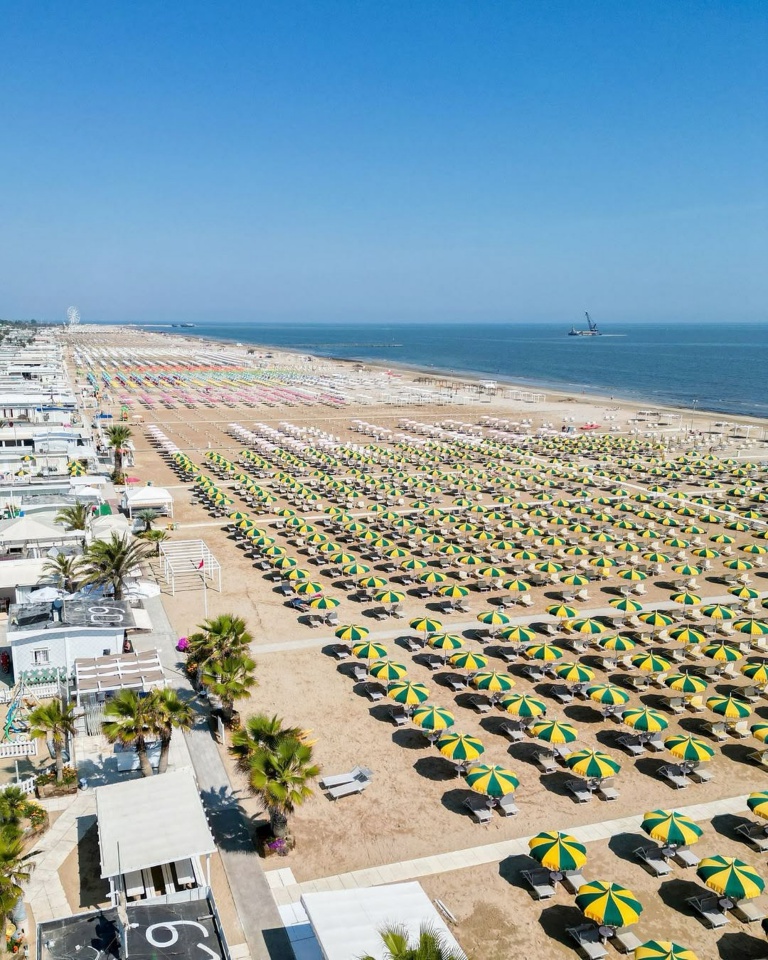
Rimini beach
After a long hiatus and much deliberation, we’re resuming our newsletter series, featuring short stories and interesting facts about Italy. This is the first newsletter, back after a long time, and we would like to celebrate with one of the most important Italian summer rituals: going to the beach (with some helpful tips too).
While for the rest of the world going to the beach might mean showing up at a beach, planting your parasol wherever, plopping down on your towel, and opening up your portable cooler, for Italians, it has a whole other meaning, and if you are over forty, even a web of memories and nostalgia. Mine is made of the smells of maritime pines and shea butter sunscreen on my skin, and the sweetness of watermelon, the best food ever on the beach.
Although there are, luckily, free beaches (look for the “spiaggia libera” sign), Italians love to go to the bagno, maybe still a little luxury we can treat ourselves to.
Lido, Bagno, and Stabilimento, are all synonymous used throughout Italy to refer to beach clubs: from north to south, Italian beaches are not merely places for leisure and relaxation under the scorching sun, but rather authentic cultural microcosms, complex temporary urban structures, and semi-public spaces where aesthetics, collective memory, and social function intertwine in often unexpected ways, not easily understood by a foreign visitor.
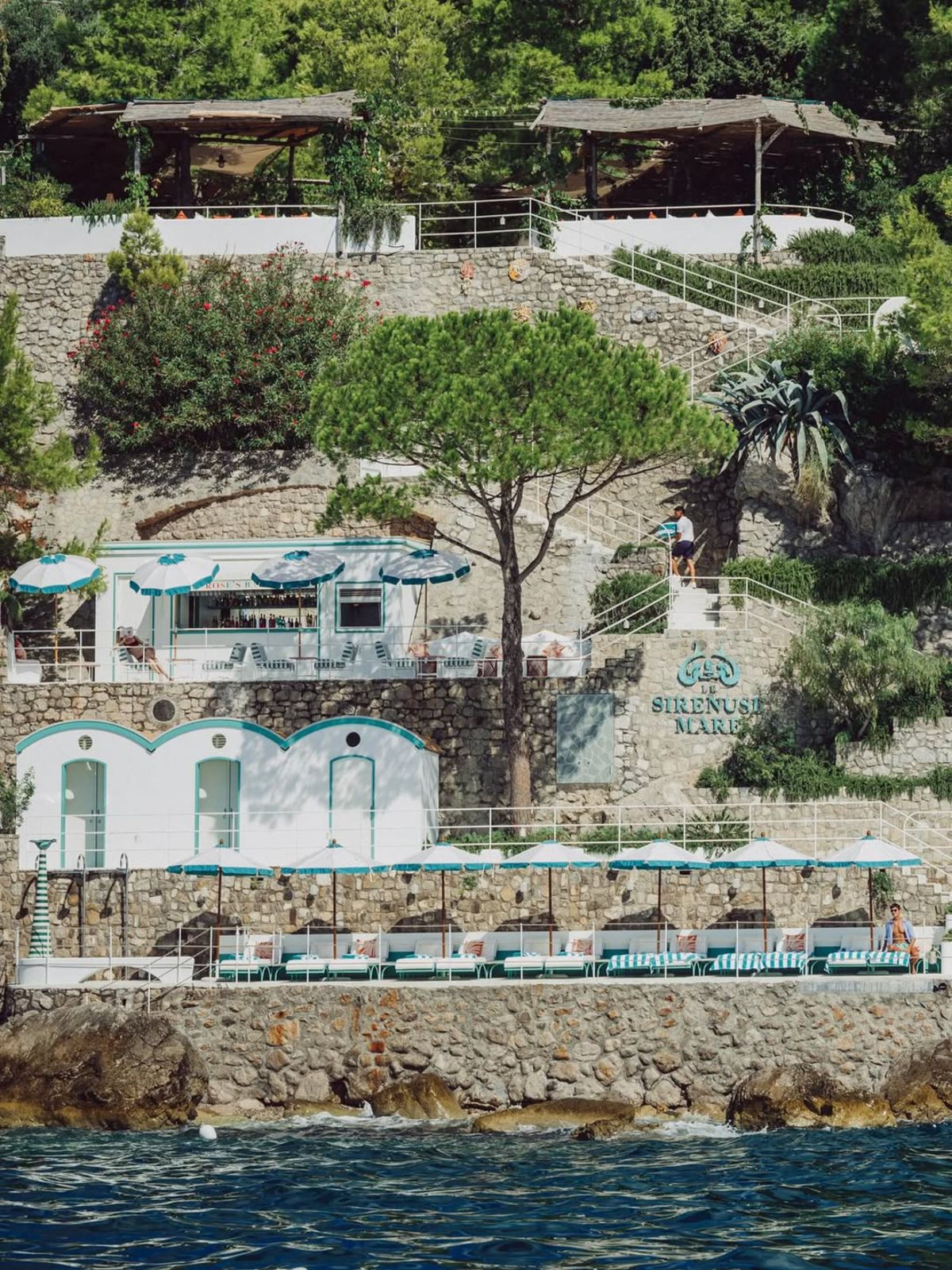
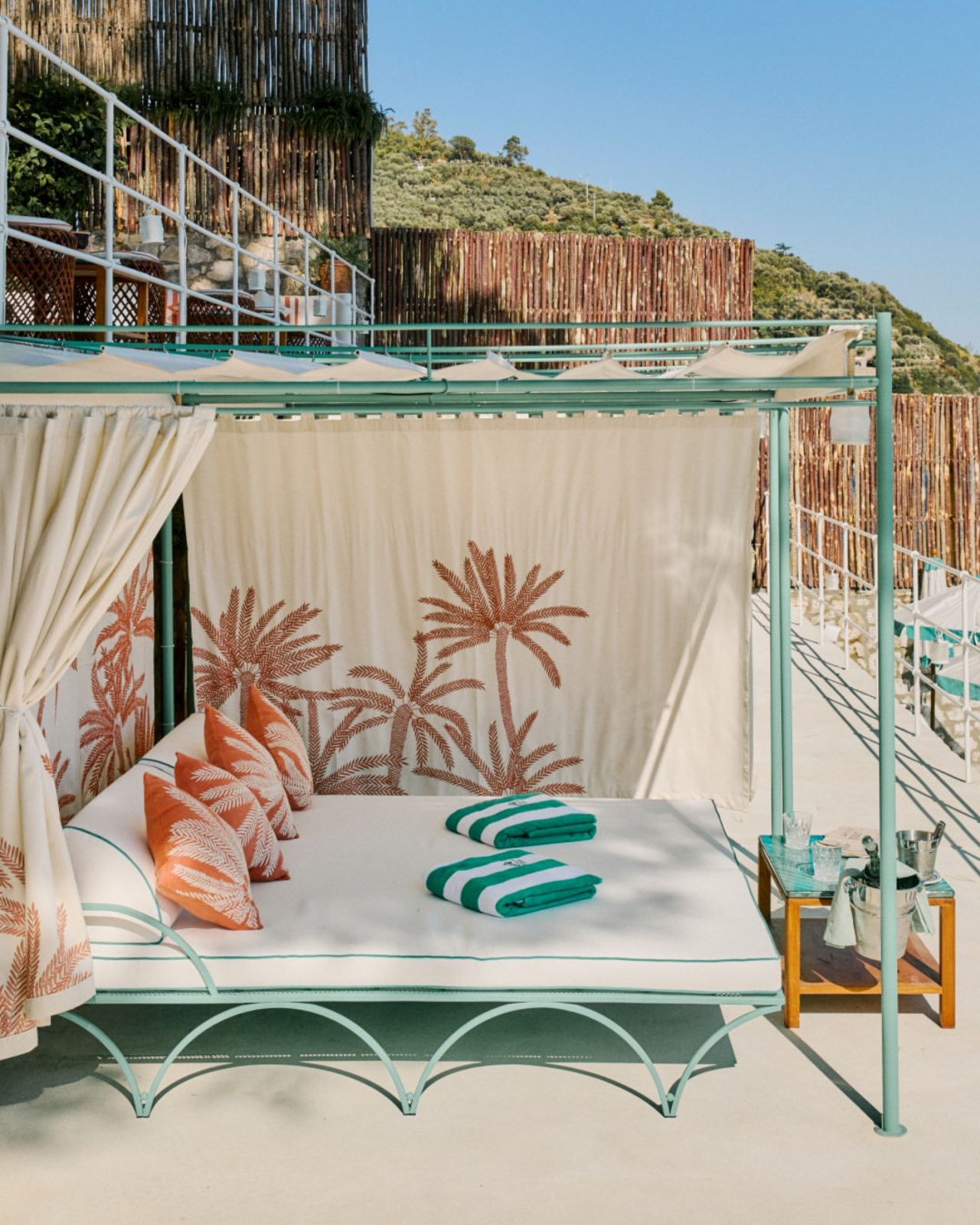
Sirenuse Mare, Nerano
Of Italy’s 8.300 km coastline, 3.400 km (41%) are beaches: wide sandy beaches, in the shades from light beige to pure white, coves with pebbly shores and rocks, more or less secluded, you name it, we have them all, and most of them have beach clubs. According to the 2023 report by Legambiente (the most respected Italian organization for the study and protection of the natural environment), in Italy there are over 30.000 beach concessions, and in some regions—such as Liguria, Emilia-Romagna, and Campania—over 60% of the beaches are occupied by beach establishments.
So, where did it all start?
History has it that the first beach resort was established in Viareggio in 1823 (or 1827 according to other sources): it was the “Bagno Dori”, designed so that ladies (yes, it was only destined to women) could find there “sufficient privacy to undress, shielded from the gaze of others, with all the consideration due to decency.” It was followed by “Stabilimento de’ Bagni” also in Viareggio, and later on, similar facilities popped up in Rimini, Genoa, Livorno, Lido di Venezia, Trieste, Palermo, Naples, and more coastal towns. And most of them are still there.
During the 19th and the beginning of the 20th centuries, beach resorts transformed the piers, which had initially been used for diving directly into the sea, into cafés, concert halls, and gaming rooms; they often became part of the services offered by the large hotels that, from that point on, began to spring up along the beaches, providing vacationers – the European aristocracy and the emerging rich international bourgeois class – with every kind of comfort and luxury.
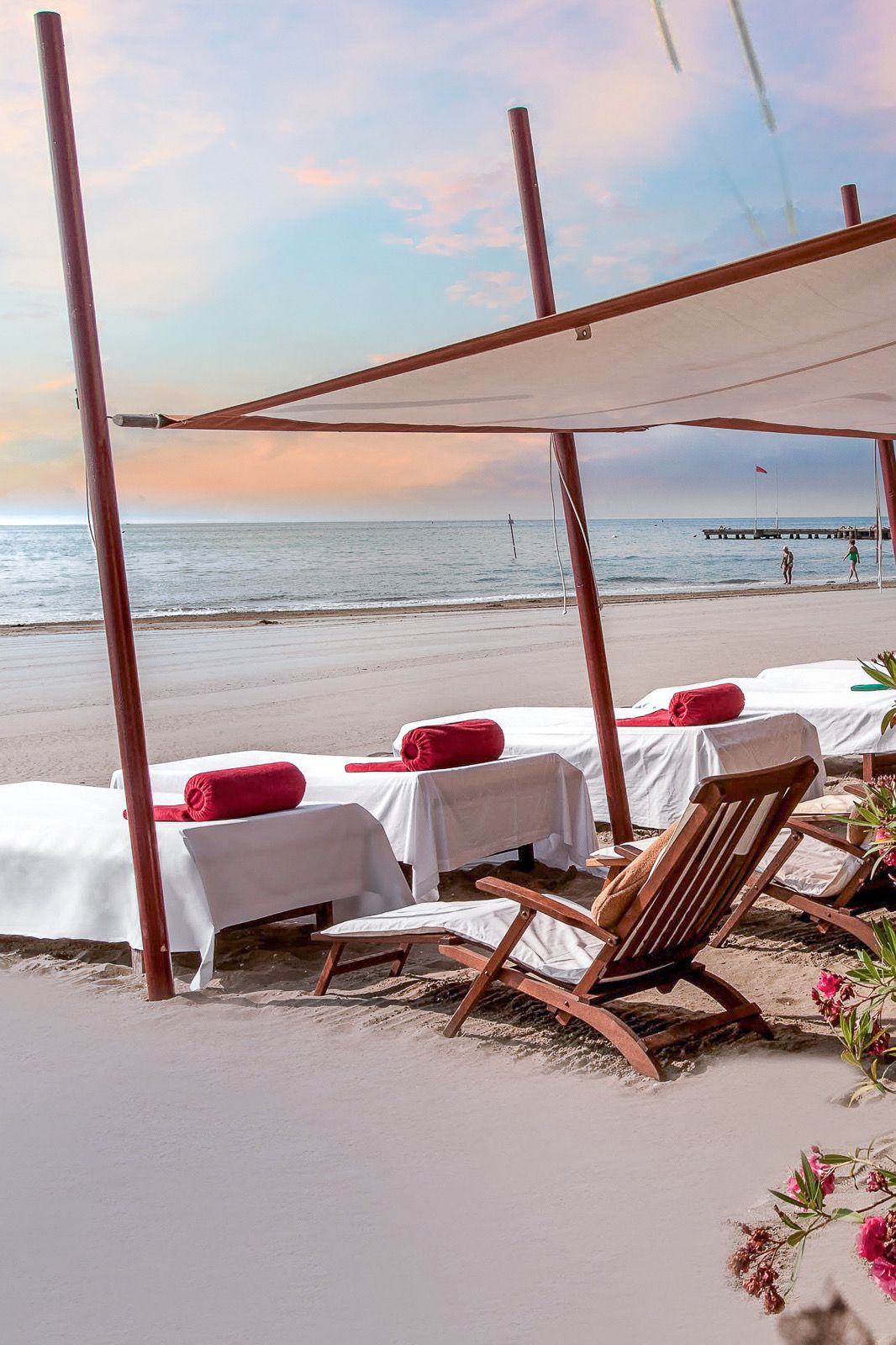
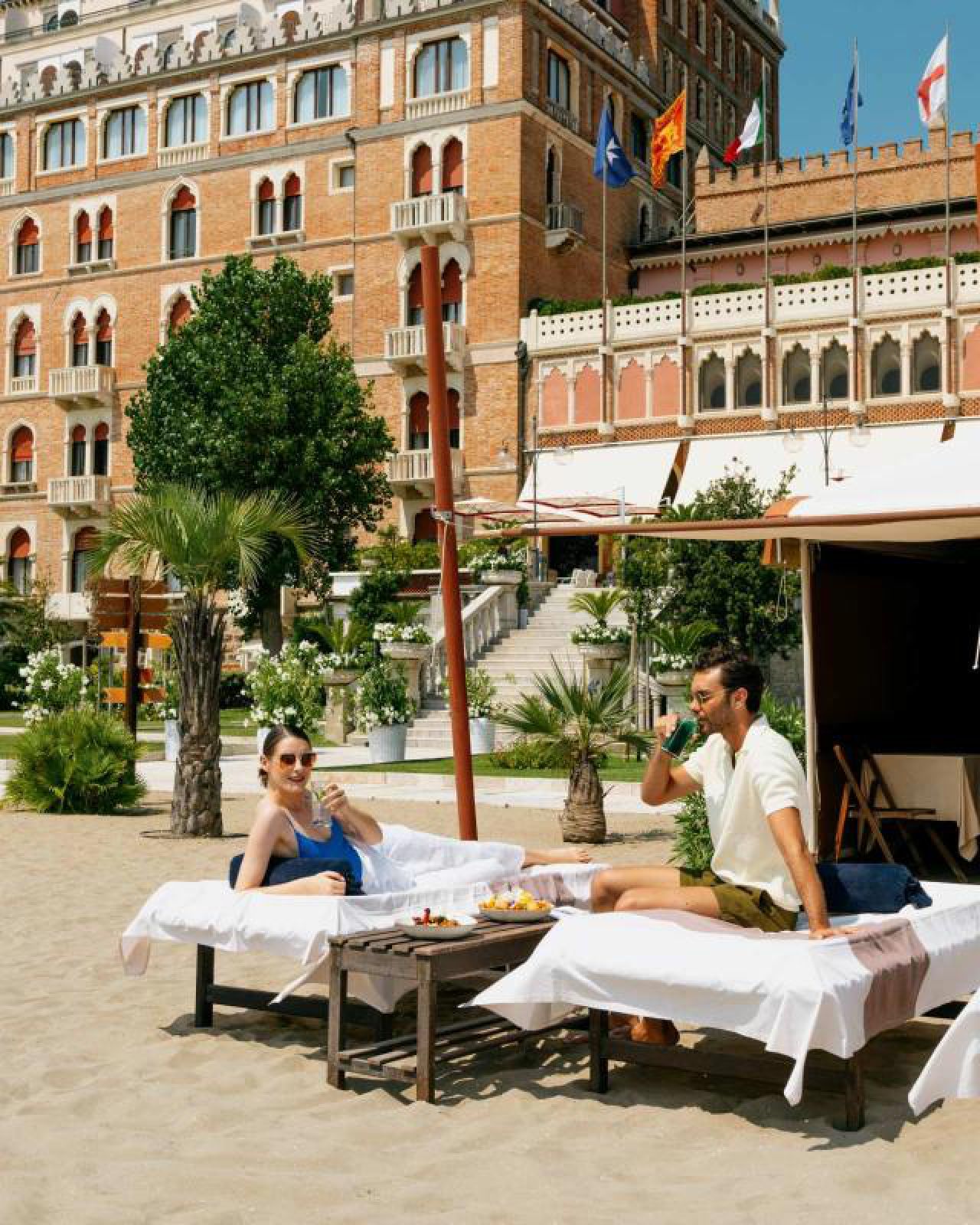
Hotel Excelsior, Lido di Venezia
However, it was only during the Fascist era that Italians really began to frequent the beaches: a body fanatic, the aesthetic of the athlete’s physique being a fundamental part of Fascist rhetoric, and a lover of the sea himself (he was born in Romagna after all), Mussolini started in 1931 the Treni Popolari: special discounted trains during August, a month when Italians drew from the cities to the beach resorts of the Adriatic coast. The Fascist propaganda also propelled the education of the youth via the creation of an enormous number of Colonie Estive (summer beach camps), which offered a vacation for thousands of children of the Fascist establishment and the emerging middle class in the 1930’s.
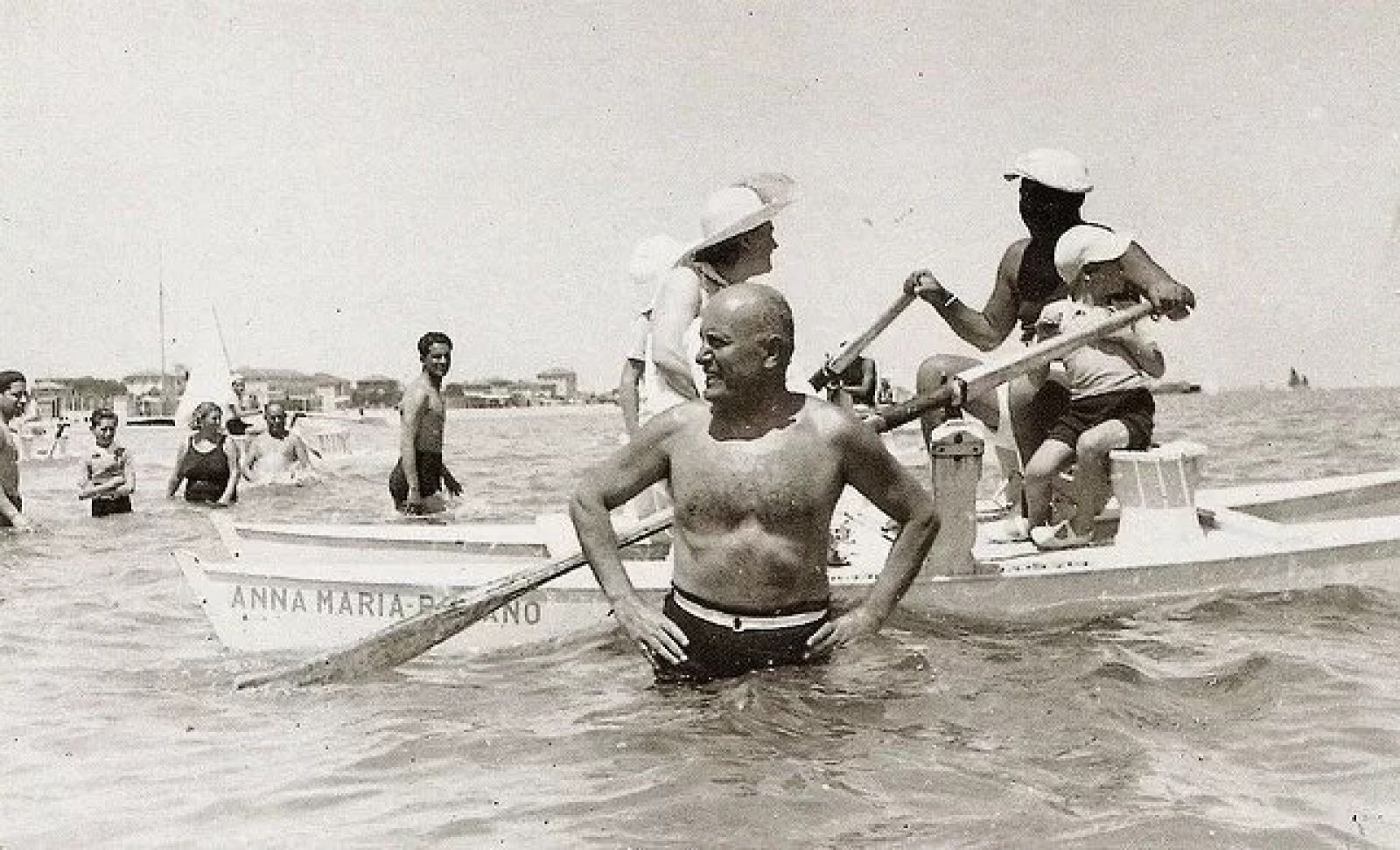
Mussolini, Rimini 1932
But it was in the aftermath of World War II that the love affair between Italians and the beach resorts started, along with the prosperity of the so-called “economic miracle”. Between the late ‘50s and the ‘60s of the 20th century, the month of August became THE month of the summer exodus: a phenomenon typical of Italy, which began with the closure of the major factories, Fiat foremost among them.
On board the legendary Fiat 500 and Seicento cars, complete with a parasol, deckchairs, and various supplies crammed onto the roof, Italian families jammed the first motorways on their way to the much-coveted beaches along the Italian boot.

Roma, Via del Mare 1960
A series of B-movies, and some masterpieces too, well narrate the phenomenon (some critics call these movies the Pink-Neorealism): Domenica D’Agosto (Luciano Emmer, 1950 with a very young Mastroianni), is the first summer comedy, that exorcises the memory of war, the famine, and the horror, and looks to the future with hope. It also set the standard of the beach comedies of the next decades, which were, for the most part, more light-hearted and carefree than the original. These films revolve around family rituals, especially the collective rite of eating pastasciutta, beach characters and beauties in bikinis, with the former courting the latter—not always successfully: La Famiglia Passaguai (Aldo Fabrizi, 1951), Il Sole Negli Occhi (Antonio Pietrangeli, 1953), Non Scherzare Con Le Donne (Giuseppe Bennati, 1955), Vacanze A Ischia (Mario Camerini, 1957), Poveri Ma Belli (Dino Risi, 1957), Mariti In Città (Luigi Comencini, 1958) Il Sorpasso (Dino Risi 1962), L’Ombrellone (Dino Risi 1965), La Voglia Matta (Luciano Salce, 1962). And, of course, you cannot forget Federico Fellini, who was born in Rimini, the beach and the sea always permeating, in particular, his films I Vitelloni (1953) and La Dolce Vita (1960). The Italian film production around the summer is way wider, and it extends over the decades. Honestly, it never stopped. Movies are not alone in this narrative: music has a big component too (but that's another story).
To the untrained eye, the Italian bagni might look all the same, an iconography of alternance of striped-monochromatic-striped parasols as the only difference. Reality is different, as well as the etiquette. The bagni of Versilia, on the Tuscan coast, are the most elegant and old-money-vibe you can find, with their impeccably orderly, monochromatic facilities: white curtains and sunbeds spaced evenly apart, a seaside “mise-en-place” that seems to mirror the bourgeois rigor of Forte dei Marmi’s architecture.
On the opposite coast of Adriatic sea, Romagna especially, but also all the beach resorts up north, till Trieste, lidos are the reign of family with kids and teens: changing cabins, showers, kids’ playgrounds, beach volley fields, sometimes even the pétanque court, a restaurant-café, and the lines of ten to fourteen colourful parasols and loungers, not so spaced as in Versilia. Do not expect a lot of silence here: the beaches of the Adriatic are for socialization, people-watching, and gossiping, teens’ first love romances, the squawk of the loudspeaker when a kid (or an elderly person) gets lost (don’t worry, they are always safely found!).
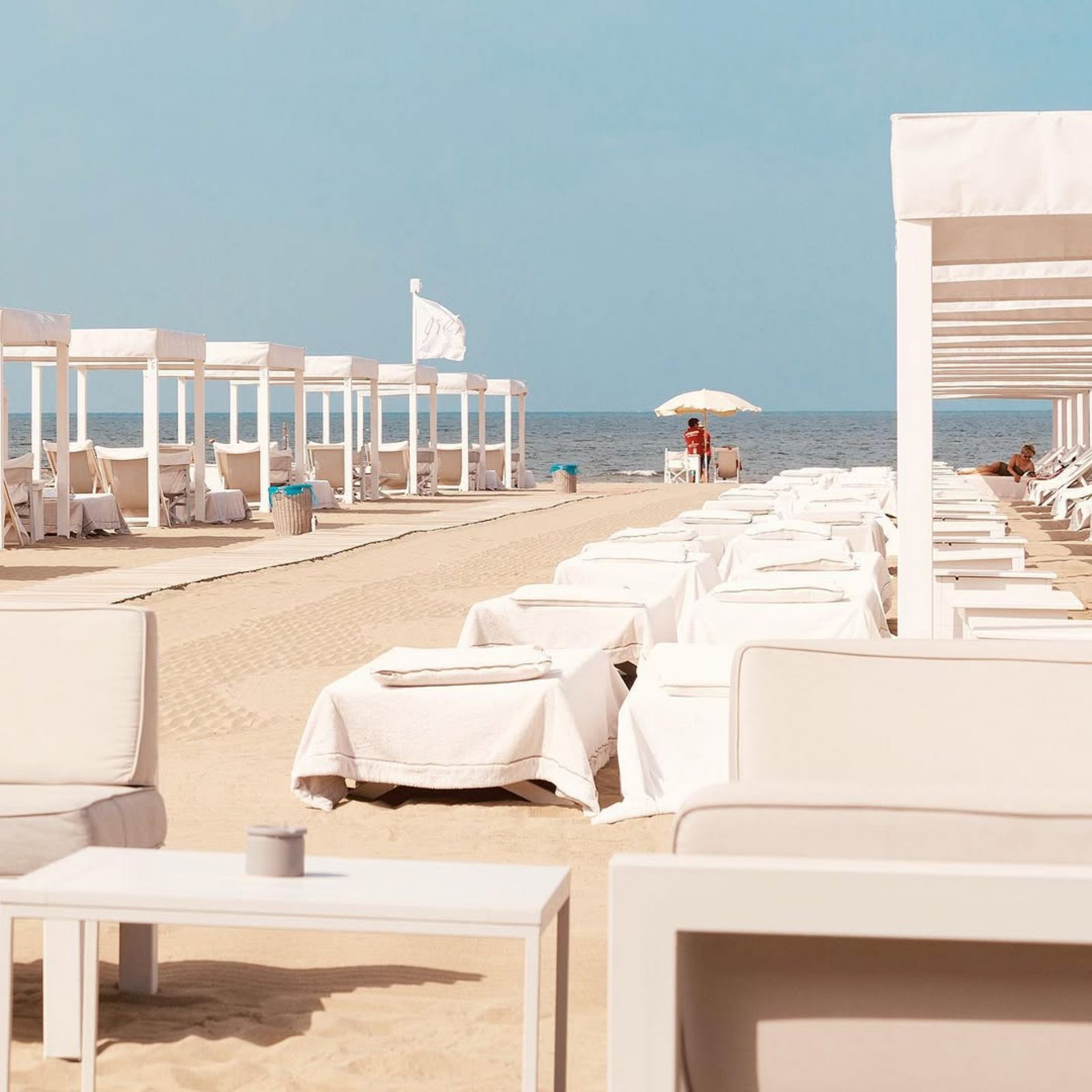
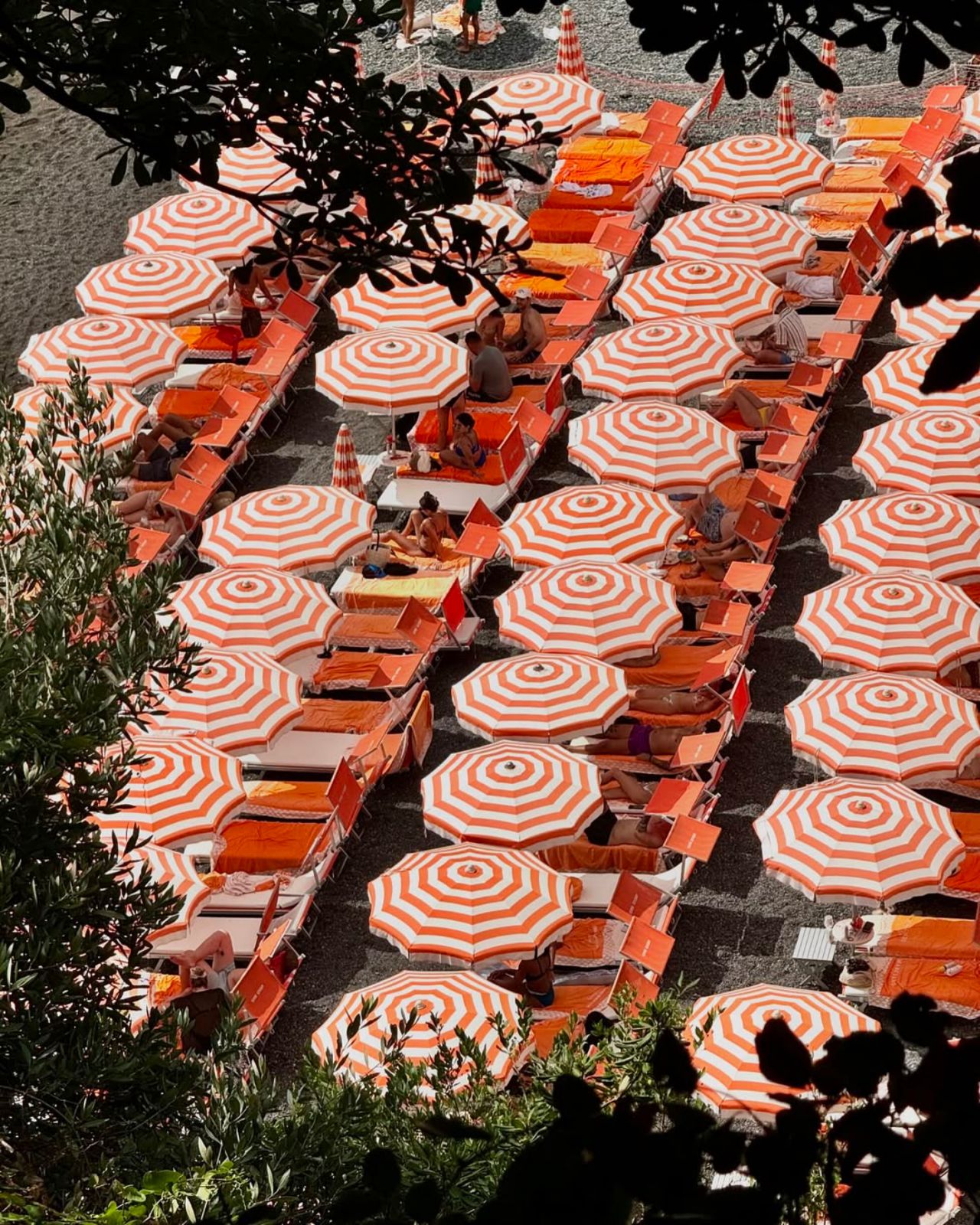
Forte dei Marmi, Tuscan coast (left) - Airenzo Beach, Positano (right)
If you are looking for a vintage atmosphere, look no further than Lido di Venezia, where the Art Nouveau style of the historic cabanas defies standardization and where the aesthetic is defined by elegant, nostalgic details, such as the “Hotel Excelsior” sign in 1930s serif font.
Unique in Europe and offering a time-travelling experience, Bagno alla Lanterna in Trieste, which locals call El Pedocin, with its old Austrian-Hungarian atmosphere, has separate areas for ladies (and kids up to 12) and men. The white, 3-meter-high separation wall along the beach might sound outdated, but every time the city asks residents whether the wall separating women from men should be torn down, all Triestini say they want things to stay the same. Maybe they want to firmly keep the tradition, maybe, as the Pedocin is mostly frequented by ladies of a certain age, they like to stay peacefully, away from their husbands, who are always asking “whats’ up for dinner?”, with their girlfriends, gossiping about the bikini’s shape of the lady lying a couple of meters away. Because the best thing about a beach where there are no men is feeling free to show off the wildest and skimpiest swimsuits at any age, bikinis with sequins and colourful glitter, leopard-print a true favorite, and even walking around topless at 70; here, you can do it with nonchalance.
The useful tips and what to expect:
Grab your bathing suite, sunscreen and join us: I'll bring the watermelon